
The latest in our series of articles from our guides
PLYMOUTH – MY FAVOURITE PLACE
If, as the famous song says, “New York, New York” is “so good they named it twice” how
good, with more than 50 towns & settlements worldwide named after it, must my home
town of Plymouth be?!
Well, given it’s associations with literally hundreds of famous sea voyages, sea-farers,
conflicts and monarchs and as the location of what is still the largest naval base &
dockyard in Western Europe, I would suggest it should rank high on your list of “must-
see” places if you’re visiting the UK.
Plymouth is probably best known internationally as the final departure point of the
Mayflower Pilgrims in 1620 and if you’re looking to trace your Mayflower heritage there
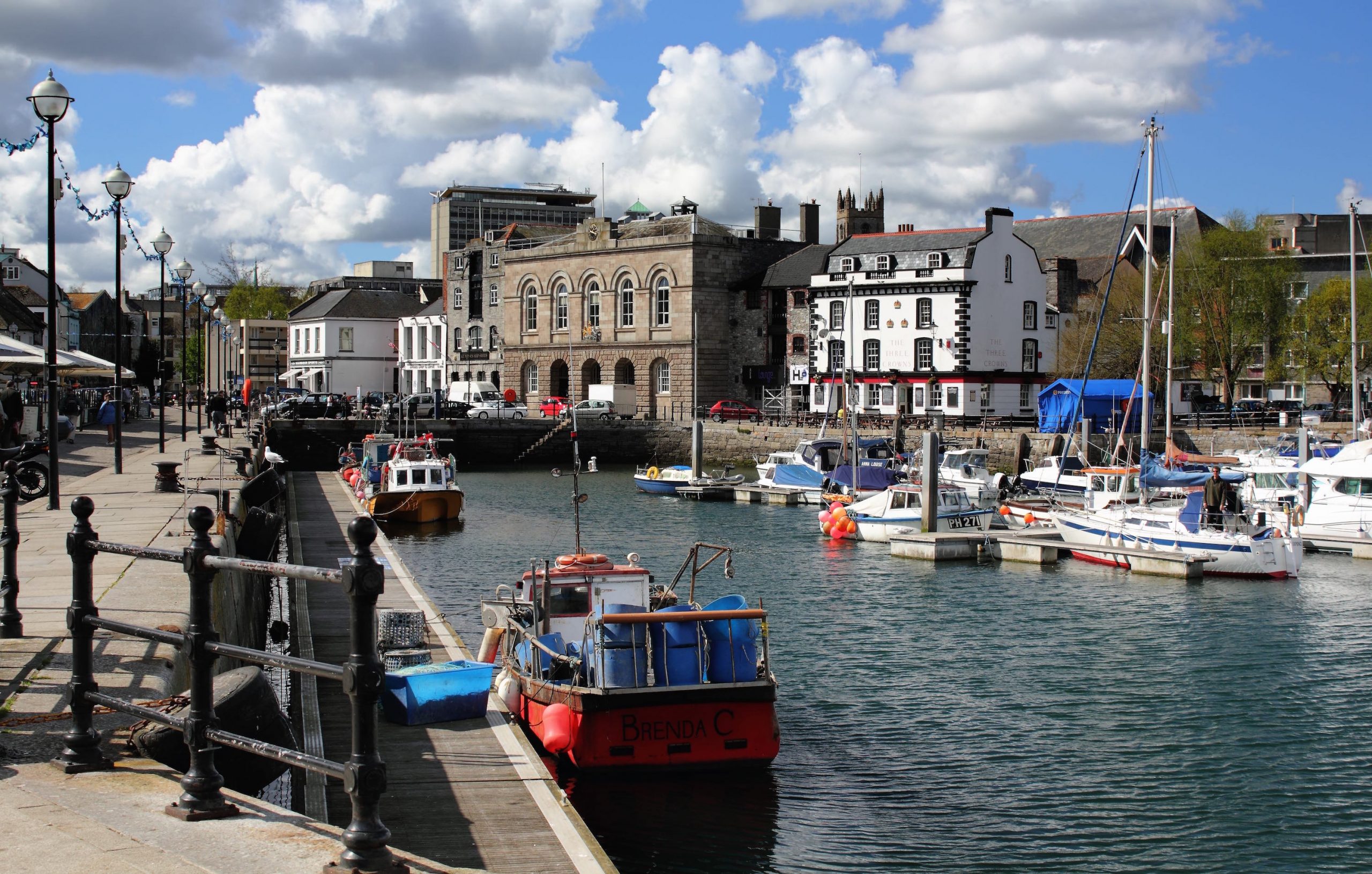
are plenty of surviving buildings from that era to visit in the well-preserved old-town
“Barbican” area of the city as well as the excellent Mayflower Museum which tells the
epic story from the perspectives of both the departing Separatists & the Native
American Wampanoag tribe in what is now Massachusetts.
Around this period in our history Plymouth was arguably the foremost maritime city in
the Western World. It was the home port of a generation of pioneering Elizabethan
sailors, whose exploits first demonstrated Britain’s mastery of the high seas & made the
establishment of a global empire possible. Come and see where Sir Francis Drake, Sir
Walter Raleigh, Sir Humphrey Gilbert and their colleagues planned their daring voyages
and hear all about their intrepid expeditions – both the successes, the failures and the
controversies!
We’d also love to show & tell you something about these amazing Plymouth-based
characters & events:-
• Defeat of the Spanish Armada in 1588
• Captain James Cook’s 3 voyages to the southern hemisphere 1768-1776
• Charles Darwin’s departure aboard HMS Beagle in 1831
• Sir Robert Falcon Scott (Scott of the Antarctic)
• Captain William Bligh of Mutiny of the Bounty fame
• Katherine of Aragon’s arrival in England in 1505
• T E Lawrence (“Lawrence of Arabia”)
• Napoleon Bonaparte’s departure into exile in 1815
• The siege of Plymouth from 1642-1646 which was pivotal to the outcome of the
English Civil War
• Plymouth’s important role in the early settlement of both Australia & New
Zealand
• Rebuilding of the city after the devastation of WWII
Plymouth enjoys a spectacular coastal location best enjoyed from a high waterfront
vantage point on “The Hoe” overlooking the vast body of water known as Plymouth
Sound where the rivers Plym & Tamar converge. It’s an ancient Saxon meeting place
where you’ll find Smeaton’s Tower, originally the Eddystone Lighthouse situated 14
miles out to sea but thought so important by the Victorians that they rebuilt it here
stone-by-stone after 130 years protecting local shipping.
The Barbican & waterfront also offer high quality restaurants & atmospheric pubs; the
National Marine Aquarium; some excellent art galleries; the famous “Plymouth Gin”
distillery and Tinside Lido if you fancy an outdoor swim. There are excellent beaches at
nearby Bovisand & Wembury and on a sunny day you could be forgiven for thinking you
were somewhere on the Mediterranean coast!
Other great locations to see & visit include:-
• The Royal Citadel completed in 1671
• The Barbican’s wonderfully preserved Elizabethan houses & the highest
concentration of cobbled streets to be found anywhere in the UK
• The hidden “Elizabethan Garden”
• Royal William Yard – the largest group of Grade 1 listed military buildings in
Europe, completed in 1831 as the Royal Navy’s victualling facility and now
being redeveloped into a vibrant leisure & modern living location.
• The Royal Albert Bridge spanning the mighty Tamar River dividing the ancient
counties of Devon & Cornwall. Completed in 1859 by the famous engineer
Isambard Kingdom Brunel.
West Country people are known for their quiet good humour and relaxed approach to
life and are sure to make you welcome. We would be delighted to show you all of this
and more besides.
Visit Plymouth, UK – the original & best!


